EV Charging in Dubai: The DEWA Green Charger Guide (2026)
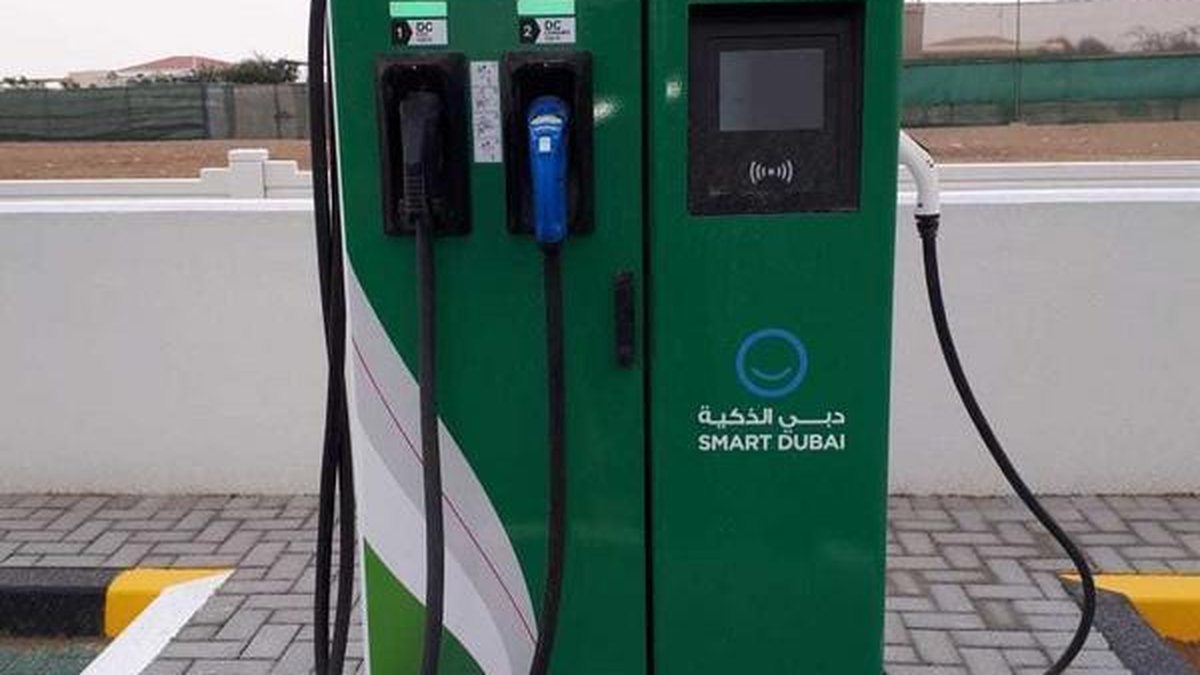
If you drive an electric car in Dubai, you have seen them: the green charging pedestals in mall car parks, on the street, outside government buildings and at petrol stations. Almost all of them belong to one network, the DEWA EV Green Charger. It is the backbone of public charging in the city, and once you understand how it works, charging becomes a non event. Here is everything you need to know, and how to use one for the first time.
What the DEWA EV Green Charger is
The EV Green Charger is Dubai Electricity and Water Authority's public charging network. Those distinctive green units are DEWA's own chargers, rolled out across the emirate to keep electric cars moving. The network runs the full range, from slower AC chargers for topping up while you shop to DC fast chargers that put serious range back in the battery in minutes.
Where the chargers are
DEWA has spread EV Green Chargers right across Dubai. You will find them at shopping malls, public car parks, government offices, residential communities, hotels and along the main roads, with more switched on all the time. Coverage is thickest across Bur Dubai, Deira and Jebel Ali and in the newer communities.
Rather than drive around hunting for one, it is far easier to see them all at once. The ChargeAE live map puts every known DEWA charger in one place, alongside Tesla, ADNOC and independent stations, and shows you the connectors, the price per kWh and whether it is working right now. You leave home knowing exactly where you are headed.
What it costs
Public charging on the EV Green Charger network is billed by the kWh at the standard public tariff, which sits at around AED 0.70 per kWh at the time of writing. In practice a top up is cheap. Adding 30 kWh, enough for roughly 180 to 200 km of driving, costs about AED 21. Charging at home on your domestic DEWA tariff is cheaper still per kWh, so most owners do the bulk of their charging overnight and treat public chargers as a convenient top up. We go deeper on the numbers in our guide to the cost of charging an EV in the UAE.
Which connector your car needs
DEWA's chargers use the same connectors as most electric cars sold in the UAE:
- Type 2 for AC charging, which is slower and ideal when you are parked for a few hours anyway.
- CCS2, the standard DC fast charging connector for most modern EVs.
- CHAdeMO, DC fast charging for a handful of models such as some older Nissans.
Check which connector your car uses before you set off. The map lists the connectors for every station, so there are no nasty surprises when you arrive.
How to charge for the first time
- Register once in DEWA's EV app or website, and link a payment method so sessions bill automatically.
- Find a charger on the ChargeAE map and check it is free and working.
- Park and plug in with the connector that matches your car.
- Start the session from the DEWA app, or by tapping your registered card at the charger.
- Unplug when you are done. On a DC fast charger, stopping around 80 percent is quickest, because charging slows a lot above that point.
AC or DC: which to use and when
Reach for AC chargers when you are going to be parked a while, at the mall, at the office or overnight, where slower charging is no bother and easy on your wallet. Reach for DC fast chargers when you actually need range in a hurry, such as before or during a longer drive. Match the charger to the moment and you will rarely stand around waiting. Heading out of the city? Our Dubai to Abu Dhabi EV guide shows where to charge on the E11.
Charging at home in Dubai
If you have a dedicated parking spot, a home charger is the cheapest and most convenient way to run an EV. You wake up to a full battery every morning and hardly touch public charging at all. DEWA supports home EV charging on the domestic tariff. A licensed installer fits a wall box, and from then on the car simply charges while you sleep. For most Dubai owners this is the moment charging stops being something they think about.
Frequently asked questions
How much does DEWA EV Green Charger cost?
Public charging runs at the standard public tariff, around AED 0.70 per kWh at the moment. Charging at home on your domestic DEWA tariff works out cheaper per kWh, which is why most owners charge overnight and use public chargers to top up.
Do you need an account to use a DEWA EV Green Charger?
Yes. You register once in DEWA's EV app or website, then start and pay for sessions from your phone. ChargeAE shows you where the chargers are, whether they are working and what they cost before you drive over.
What connectors do DEWA EV Green Chargers use?
The DC fast chargers use CCS2 and CHAdeMO, and the AC chargers use Type 2, the same connectors as most EVs sold in the UAE. Check your car's connector before you go.
Find your next charge with ChargeAE
Every EV charging station in the UAE on one live map with live status, prices per kWh, connectors and trip planning. Free, no account, no ads.